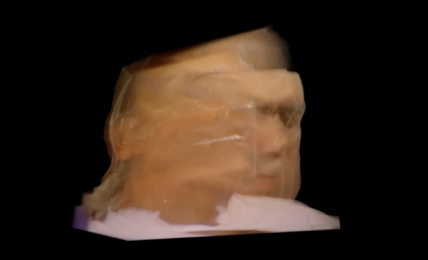
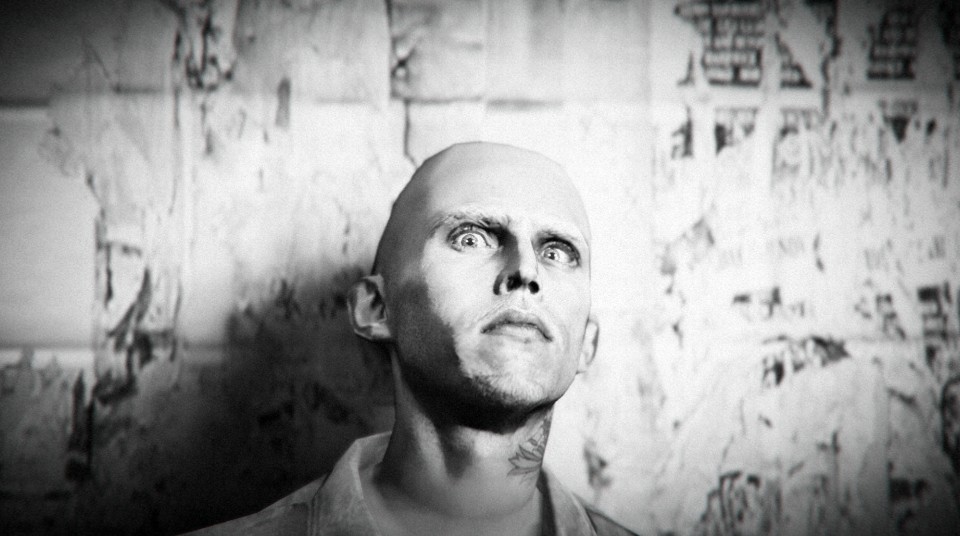
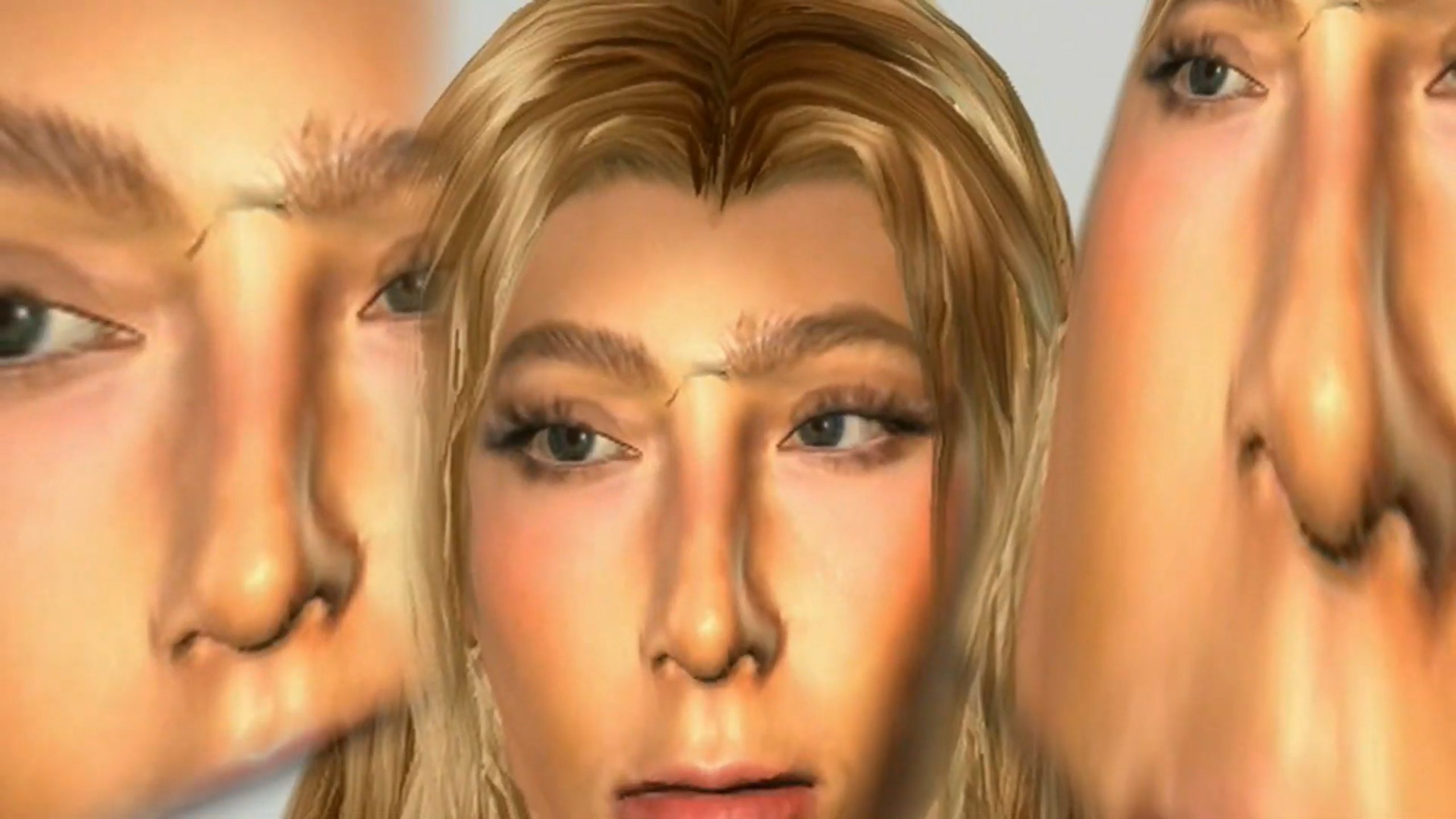
Surface Deletion Archive (March 2026) is a digital artwork and ongoing online project created by Nicol Eltzroth Rosendorf. It functions less like a traditional “archive” and more like a system that continuously processes fragments of online content—headlines, images, text—by absorbing, overwriting, and erasing them.
Instead of preserving information, the work deliberately destabilizes it. It cycles through processes like intake, overwrite, and erasure, meaning that what appears on the screen is never fixed. Text becomes layered, partially replaced, or rendered illegible. Images lose clarity. Context disappears. The result is a constantly shifting “surface” where everything exists, but nothing can be fully held or understood.
What makes this artwork distinct is that it challenges the very idea of an archive. Traditionally, archives are meant to store, protect, and organize memory. Here, the opposite happens: memory is fragmented, flattened, and continuously rewritten. The system does not prioritize meaning or hierarchy—everything, from catastrophe to trivial content, exists on the same visual and informational level.
Because of this, the artwork doesn’t just present content—it models a behavior. It reflects how digital environments process information today:
Rapidly,
Repetitively,
Without resolution,
It becomes less about what is being shown and more about how information is being handled—and what that does to our ability to read, interpret, and understand.
Looking at the Surface Deletion Archive, I don’t just see a system processing information—I see a reflection of how we are being processed by it.
The image I attached stayed with me in a particular way. The fragments of text—almost like system notes or procedural descriptions—didn’t feel like neutral explanations. Lines like “Illegibility is not an error. It is a trajectory” or “The system cycles through four states: silence, intake, overwrite, erase” read less like descriptions of the work and more like instructions for how we are now expected to live with information. They are not just explaining the archive—they are exposing a condition. And that is what made them stand out to me.
What the work suggests is that information is no longer something we move through with intention. Instead, it moves through us. It
Absorbs,
Erases,
And overwrites continuously,
It removes the space where reflection could happen. What stays is not meaning, but motion. Not understanding, but exposure.
That is what feels most unsettling: the sense that being informed no longer means being aware. It means being continuously updated.
In my own experience, especially as a Ukrainian student, this feels painfully real. News doesn’t arrive as something complete or stable. It comes in fragments—alerts, headlines, reposts, corrections, contradictions—and before I can fully sit with one, another takes its place. There is no pause, no moment to process what something actually means. The system keeps moving, and I am expected to move with it.
At some point, I realized I am not choosing what I see as much as I think I am. The news adapts to me—my location, my reactions, my patterns—but in doing so, it begins to shape how I think, what I prioritize, and even what I feel. It anticipates me. And that is where the control shifts.
It no longer feels like I am reading the news. It feels like the news is reading me.
This is where the artwork becomes more than an archive—it becomes a mirror of a larger condition. The “surface” it creates is not just aesthetic; it is behavioral. It trains us to exist on that same level: scanning, reacting, moving on. Over time, analysis starts to feel like a delay rather than a necessity.
Depth becomes inconvenient.
Slowness becomes impossible.
And so we adapt.
We begin to accept partial understanding as enough. We stop asking deeper questions not because we don’t care, but because there is no time to ask them before the next thing arrives. The system doesn’t need to silence us—it overwhelms us until silence becomes the easiest response.
That is the trap.
We feel informed, but we are actually suspended in a constant state of incompletion. Surrounded by information, but disconnected from meaning. And because everything holds the same surface weight—tragedy, updates, distractions—it all begins to blur.
For me, this is not abstract. Every piece of news is tied to something real—family, home, fear, uncertainty. But even those realities become fragmented when they are constantly interrupted by the next update. I don’t get to fully feel something before I am already being asked to move on.
That’s why the work feels so honest.
It doesn’t just describe a system—it shows how we are already inside it.
Nevertheless, as we are a part of this system I come to the conclusion that someone decided that attention is a resource, that fragmentation is profitable, that a fast reaction is worth more than a slow understanding. Platforms are not neutral — they are built with intentions that rarely align with ours. Engagement is the metric. And engagement doesn’t require understanding. It only requires response.
So the trap is not the information itself. The trap is the design that delivers it.
That realization changed something for me.
Because if the system is designed, it can be resisted — not by escaping it, but by moving differently inside it. Slowness becomes a form of refusal. Sitting with one story long enough to actually process it is almost a radical act now.
I started asking myself: what do I actually know about this, versus what have I just been exposed to?
The difference is significant.
Maybe awareness of the system is the first disarmament. Not just knowing it exists — but feeling it operate on you in real time. Noticing when you’ve moved on before you’ve actually arrived.
That gap — between being updated and being aware — is where something can still grow.
And maybe that’s what art like this does at its best.
It doesn’t give answers. It slows us down long enough to feel the question.
We can’t exit the surface. But we can learn to stand on it differently — deliberately, slowly, with full knowledge of what it’s trying to do to us.
:::
 Adriana is a freshman majoring in Rhetoric & Communication Studies with a double minor in Entrepreneurship and VMAP. She is passionate about understanding human behavior and using those insights to craft meaningful marketing strategies. With a strong interest in creative storytelling, branding, and social impact, Adriana enjoys exploring how ideas can be transformed into initiatives that connect people and inspire action. She is especially interested in projects that combine innovation, purpose, and community engagement.