Gen Z, a generation shaped by the post-pandemic world, has been deeply affected by the shift in how we interact with our environment. I Long to Run (2026) is a simple, yet powerful artwork that captures this reality. This short film questions a deeper layer of human existence by integrating a video of running horses and the presence of some human feet on top of the screen. The video portrays what feels like a lack of freedom—more precisely, a form of social and emotional limitation. The piece leads its audience to an unsettling realization: that even videos of horses running can appear more free than we, as humans, feel in our own bodies—despite having the physical ability to go anywhere we choose.
The horses, though confined to a screen and mediated through digital technology, somehow embody a sense of liberation that we struggle to access ourselves. This raises an important question: what makes our freedom feel so distant, almost nonexistent? Is it the narratives imposed by society, labeling Gen Z as the “broken” generation? Or is it something internal—our own thoughts constructing an idealized version of freedom that we long for but don’t believe we can truly attain? Moving abroad at the age of eighteen has been a journey that has brought lots of self-doubt. As being part of that generation, I myself have had to confront the societal constructs that have in fact made me question my ability to run as free as the horses featured in Iskoz art piece. This tension has become a constant back and forth; it has both pushed me forward as great motivation but has also done its job to feel incredibly restricted. Living independently at such a young age has unveiled a massive challenge: the battle that I can juggle the complexities of daily life, but also the struggle and drama all on my own.
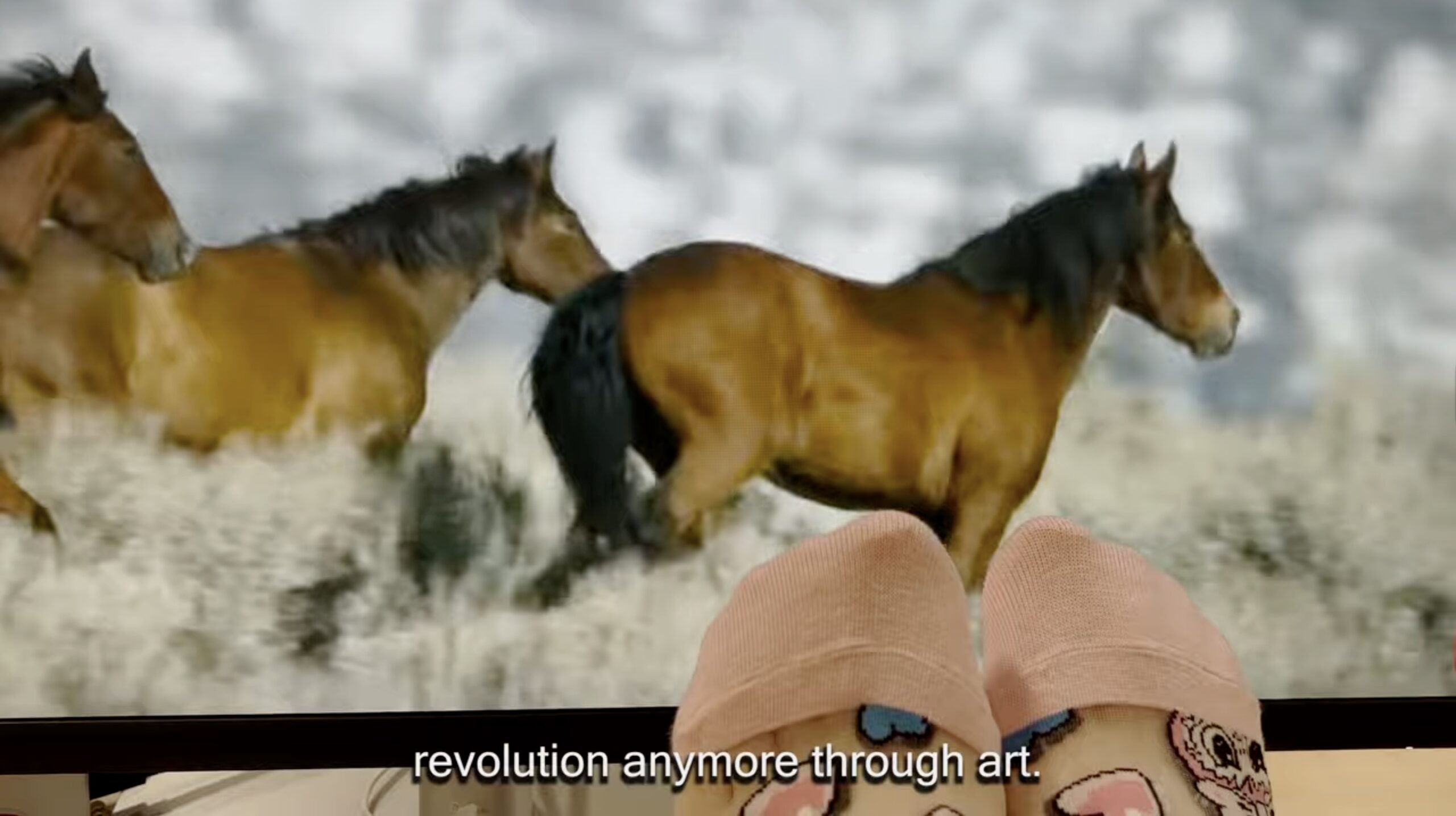
One of the most striking moments in the video occurs when the focus shifts from the horses to the individual’s own feet, accompanied by the question, “Why am I crying?” This shift inward highlights how we perceive ourselves in the absence of external stimuli. It forces us to confront difficult questions: Do we see ourselves as worthy of the kind of freedom we admire? Do we believe we deserve to feel as unrestrained as the horses appear? Too often, the answer leans toward no. As a result, we begin to seek validation through external factors, creating a cycle of unworthiness, unresolved emotions, and a mindset centered on survival rather than genuine living. Personally, I saw this moment as a great portrayal of comparison and immediately thought of the phrase “Comparison is the thief of joy”. The horses imitate the way in which social media has become a platform of massivity and fakeness rather than of uniqueness and expression.
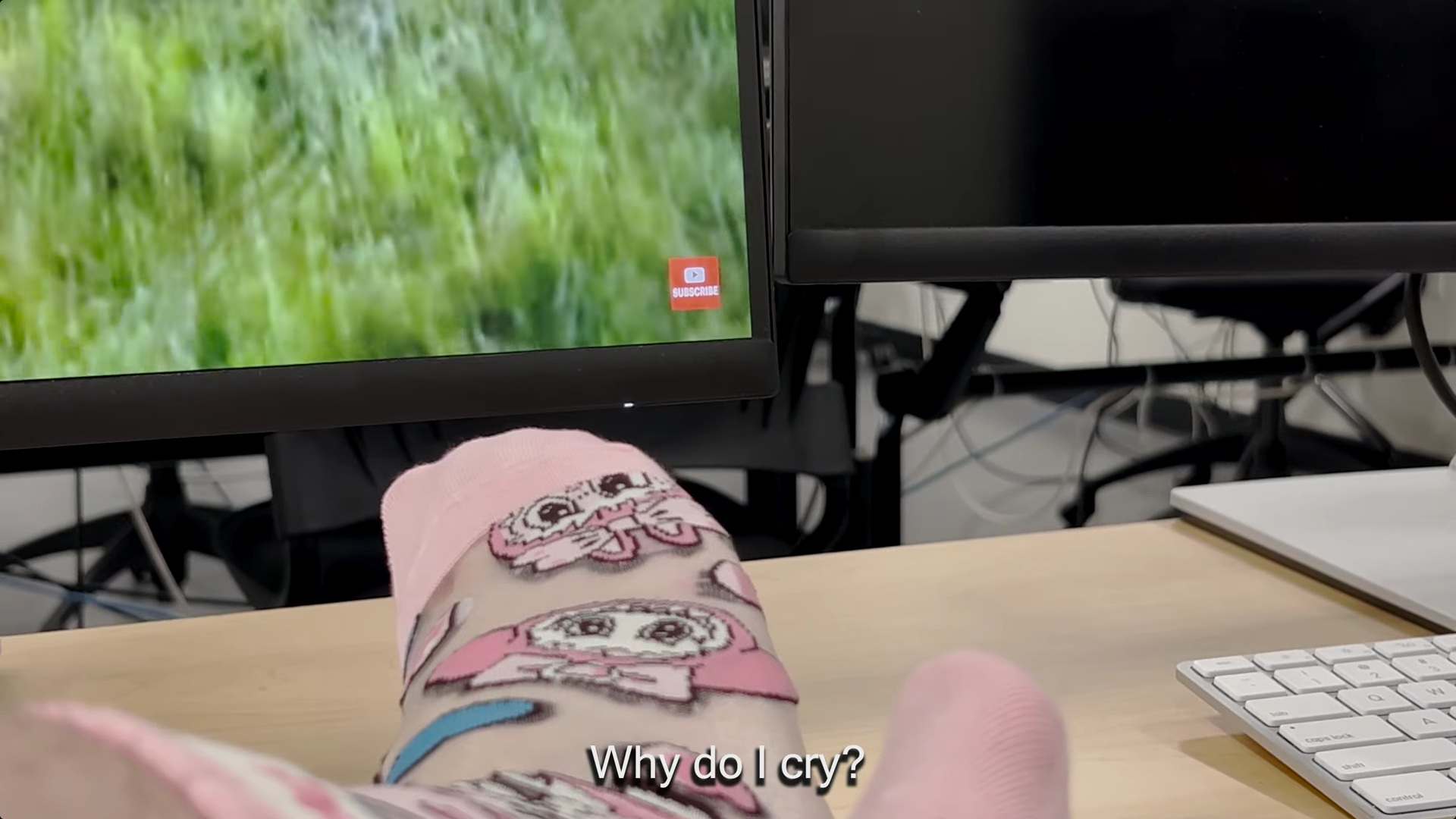
Ultimately, the piece reveals a fundamental contradiction: Gen Z exists in a world of theoretical freedom, yet experiences deep emotional constraint. This collage animation effectively constructed the way society nowadays can jeopardize our potential, as we now tend to weigh our value with an external standard and/or idealization rather than with a well thought self-retrospection. In this way, the generation becomes trapped—not physically, but psychologically—caught in a state of mental paralysis.
:::
Check out Maya Iskoz’s I Long To Run.

Camila Daud / UX/UI
Camila Daud is a Junior at the University of Richmond, majoring in Business Administration with a concentration in Marketing and a minor in VMAP. She is also a member of the Richmond field hockey team, and in her free time enjoys playing the guitar, being outdoors, and traveling.